How Artificial Intelligence Is Reshaping Film Production Today
Discover how the artificial intelligence impact on film production is transforming scripts, VFX, casting, and editing — reshaping Hollywood as we know it.
The film industry has always been a place where technology and creativity collide. From the invention of sound in cinema to the rise of CGI, every major technological leap has fundamentally changed how movies get made. Right now, we’re in the middle of another seismic shift — and this time, artificial intelligence is driving it. Whether you’re a filmmaker, a film student, or just someone who loves movies, the changes happening behind the scenes are impossible to ignore.
AI isn’t just a buzzword being thrown around at tech conferences anymore. It’s actively being used on film sets, in editing suites, in casting decisions, and even in scriptwriting rooms. The question is no longer whether AI will reshape film production — it already is. The more pressing questions are how deep those changes go, who benefits, and what gets lost along the way.
What AI Is Actually Doing in Film Production Right Now
It’s easy to imagine AI in filmmaking as something futuristic — robots directing actors or algorithms generating entire blockbusters from scratch. The reality is both more mundane and more interesting than that. AI tools are currently embedded across nearly every stage of the production pipeline, often in ways audiences never see.
Pre-Production: Scripts, Scheduling, and Casting
Before a single frame is shot, AI is already at work. Script analysis tools like ScriptBook and Cinelytic use machine learning to evaluate screenplays, predicting box office performance based on story structure, genre, tone, and historical data from comparable films. Studios have been quietly using these platforms to inform greenlight decisions — a development that has sparked real debate about whether data should drive creative choices.
Scheduling and budgeting software powered by AI can now analyze a script and generate optimized shooting schedules in a fraction of the time it would take a human production manager. Tools like Filmustage scan scripts and automatically break them down by location, cast, props, and other production elements — saving weeks of pre-production labor.
Casting is another area seeing AI-driven change. Facial recognition and behavioral analysis tools are being used to match actors to roles based on audience data and performance analytics. While this raises obvious ethical red flags around bias and diversity, it’s happening in the industry whether or not the conversation has caught up.
Production: On-Set AI and Real-Time Tools
On a modern film set, AI-powered tools are helping with everything from camera work to continuity. Autonomous camera systems can track actors and adjust framing in real time. AI-assisted lighting systems analyze scenes and suggest or automate adjustments based on the director’s visual style. These tools aren’t replacing cinematographers — they’re handling the repetitive, data-heavy tasks so human crew members can focus on creative decisions.
Virtual production, which exploded in popularity after The Mandalorian used LED volume technology, is being supercharged by AI. Real-time rendering engines now use machine learning to generate photorealistic backgrounds that respond dynamically to camera movement and lighting changes. AI is also being used to generate digital doubles and de-age actors — capabilities that were once enormously expensive and time-consuming.
Post-Production: Where AI’s Impact Is Most Visible
If there’s one area of filmmaking where AI has made the most dramatic impact in the shortest amount of time, it’s post-production. The editing room, the VFX pipeline, and the sound studio have all been transformed.
Automated Editing and Assembly Cuts
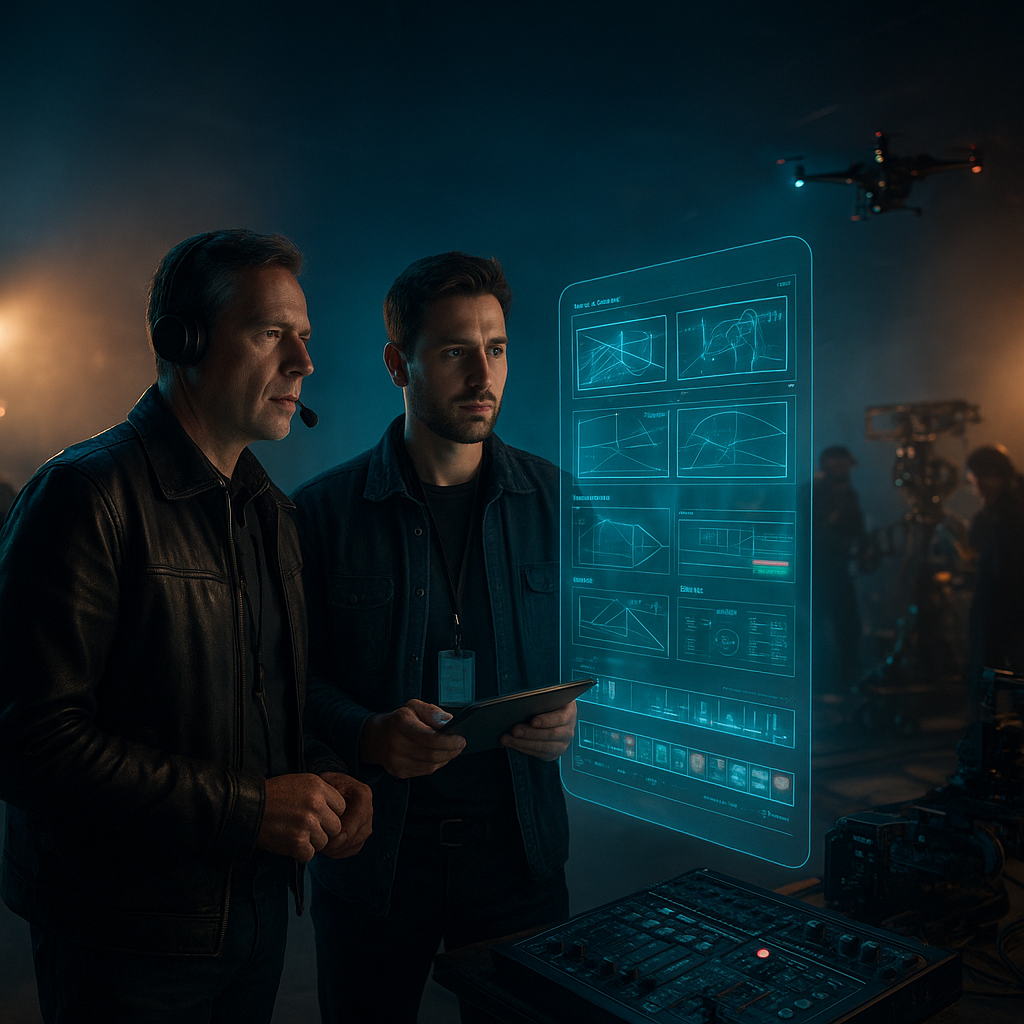
AI editing tools like Magisto and Adobe’s Sensei can analyze raw footage and generate assembly cuts based on pacing, emotional tone, and narrative structure. These aren’t finished edits — they’re starting points that human editors then refine. But the time savings are significant, especially for documentary and short-form content where turnaround times are tight.
IBM’s Watson was famously used to cut a trailer for the horror film Morgan back in 2016 — an early proof of concept that’s now looking less like a novelty and more like a preview of standard industry practice.
Visual Effects and Deepfake Technology
AI-generated visual effects have democratized capabilities that were once exclusive to studios with nine-figure budgets. Tools like Runway ML allow independent filmmakers to remove backgrounds, generate visual elements, and composite scenes without a full VFX team. This is genuinely exciting for low-budget filmmakers who previously couldn’t compete on a visual level with major studio productions.
On the higher end, generative AI is being used to create synthetic environments, creatures, and even crowd simulations. The VFX industry estimates that AI-driven tools can reduce rendering times by up to 50% in some workflows — a number that matters enormously when rendering a single frame can take hours.
Deepfake technology — which uses AI to map one person’s face onto another’s — sits at the center of the industry’s most heated ethical debates. It’s been used to resurrect deceased actors (with varying degrees of family consent and audience acceptance), de-age performers, and create digital doubles for dangerous stunt sequences. The technology works. The ethics are still being figured out.
Music, Sound Design, and Localization
AI-generated music platforms like AIVA and Soundraw are being used to score short films, trailers, and even some feature productions. These tools generate original compositions based on mood, tempo, and genre specifications — cutting out weeks of back-and-forth with human composers for certain types of content.
Automated dubbing and localization is another area experiencing rapid AI-driven change. Startups like Deepdub and Papercup use AI to translate and re-voice films in different languages while preserving the original actor’s vocal tone and cadence. For global streaming platforms releasing content in dozens of markets simultaneously, this is a massive operational advantage.
The Controversy: What’s Being Lost (and Who’s Losing It)
It would be dishonest to write about AI in film production without addressing the very real human cost of these changes. The 2023 SAG-AFTRA and WGA strikes were, in large part, about AI — specifically about how studios plan to use it, who owns the rights to AI-generated likenesses and scripts, and what protections workers have as automation expands.
Writers fought for provisions that prevent studios from using AI-generated scripts as a baseline and then paying human writers only to “polish” them. Actors pushed for protections against having their digital likeness used without consent or fair compensation. These aren’t hypothetical concerns — studios had already been exploring exactly these practices.
Beyond the labor issues, there are deeper creative questions worth asking. If AI script analysis tools consistently favor proven formulas — genres, story structures, and character archetypes that performed well historically — does that create pressure toward creative homogeneity? Does a data-driven greenlight process make it harder for genuinely original films to get made? This is particularly concerning when considering how underrepresented voices and stories have historically struggled to gain traction through traditional studio gatekeeping.
Research published on platforms like ResearchGate has highlighted concerns about bias in AI casting tools, which can reflect and amplify existing inequalities in Hollywood if the training data skews toward historically successful (but demographically narrow) performers.
What This Means for Aspiring Filmmakers and Film Students
For anyone currently studying film or building a career in the industry, AI represents both a threat and an opportunity — sometimes simultaneously. Film schools are grappling with how to incorporate AI literacy into curricula without losing focus on foundational craft skills.

The practical reality is that knowing how to work alongside AI tools is becoming as important as knowing how to use a camera or edit in Avid. Filmmakers who understand both the creative and technical dimensions of AI-assisted production will have a significant advantage over those who treat it as either a magic solution or an existential threat to be ignored.
At the same time, distinctly human skills — emotional intelligence, cultural sensitivity, genuine storytelling instinct — are becoming more valuable as AI handles more of the technical workload. The films that resonate most deeply with audiences aren’t going to be the ones produced most efficiently. They’ll be the ones that feel the most human. There’s even evidence that movies positively affect our emotional well-being precisely because of the deeply human experiences they reflect back to us.
- Learn the tools: Familiarity with AI-assisted editing, VFX, and pre-production platforms is increasingly expected in entry-level roles.
- Understand the ethics: Questions around consent, labor rights, and intellectual property in AI-assisted production are central to the industry’s current debates.
- Protect your creative voice: AI can handle many technical tasks, but original perspective and genuine storytelling instinct remain irreplaceable.
- Stay informed: This space is evolving faster than almost any other area of the industry — what’s cutting-edge today may be standard practice within 18 months.
The Road Ahead: Collaboration, Not Replacement
The most nuanced picture of AI in film production isn’t one of replacement — it’s one of transformation. The roles that exist in five years will look different from the roles that exist today. Some jobs will disappear. New ones will emerge. The skill sets required across the industry will shift, as they always have when major technological changes arrive.
McKinsey’s research on digital transformation in the film and TV industry suggests that the companies and creators who thrive will be those who figure out how to integrate AI as a collaborative tool rather than treating it as either a cost-cutting shortcut or an existential enemy. That’s easier said than done, especially given the legitimate concerns about labor, ethics, and creative quality that are still very much unresolved.
What seems clear is that AI isn’t going back into the bottle. The tools exist, they work, and they’re getting more capable every month. The decisions being made right now — in contract negotiations, in studio boardrooms, in film school curricula, and in individual creative practices — will shape what kind of industry emerges on the other side of this transition.
Conclusion
Artificial intelligence is reshaping film production at every level, from how scripts are analyzed and shooting schedules are built, to how visual effects are rendered and films are localized for global audiences. The technology is delivering genuine efficiencies and opening creative possibilities that didn’t exist a decade ago, particularly for independent filmmakers working with limited resources.
At the same time, the industry is navigating serious unresolved questions around labor rights, creative ownership, and the risk of algorithmic homogeneity in storytelling. The 2023 strikes made clear that these aren’t abstract concerns — they’re issues that directly affect the livelihoods and creative autonomy of the people who make films.
The most important thing to understand is that AI in filmmaking isn’t a single story. It’s a collection of tools, debates, opportunities, and genuine dangers that are playing out simultaneously. Staying informed, thinking critically, and engaging honestly with both the potential and the pitfalls is the only way to navigate it clearly — whether you’re a filmmaker, a film fan, or someone watching this industry from the outside with growing curiosity about where it’s all heading.