
Why We Can’t Stop Watching: The Psychological Appeal of True Crime Documentaries
Explore the psychological appeal of true crime documentaries and why millions are captivated by real-life mysteries, criminal minds, and the pursuit of justice.
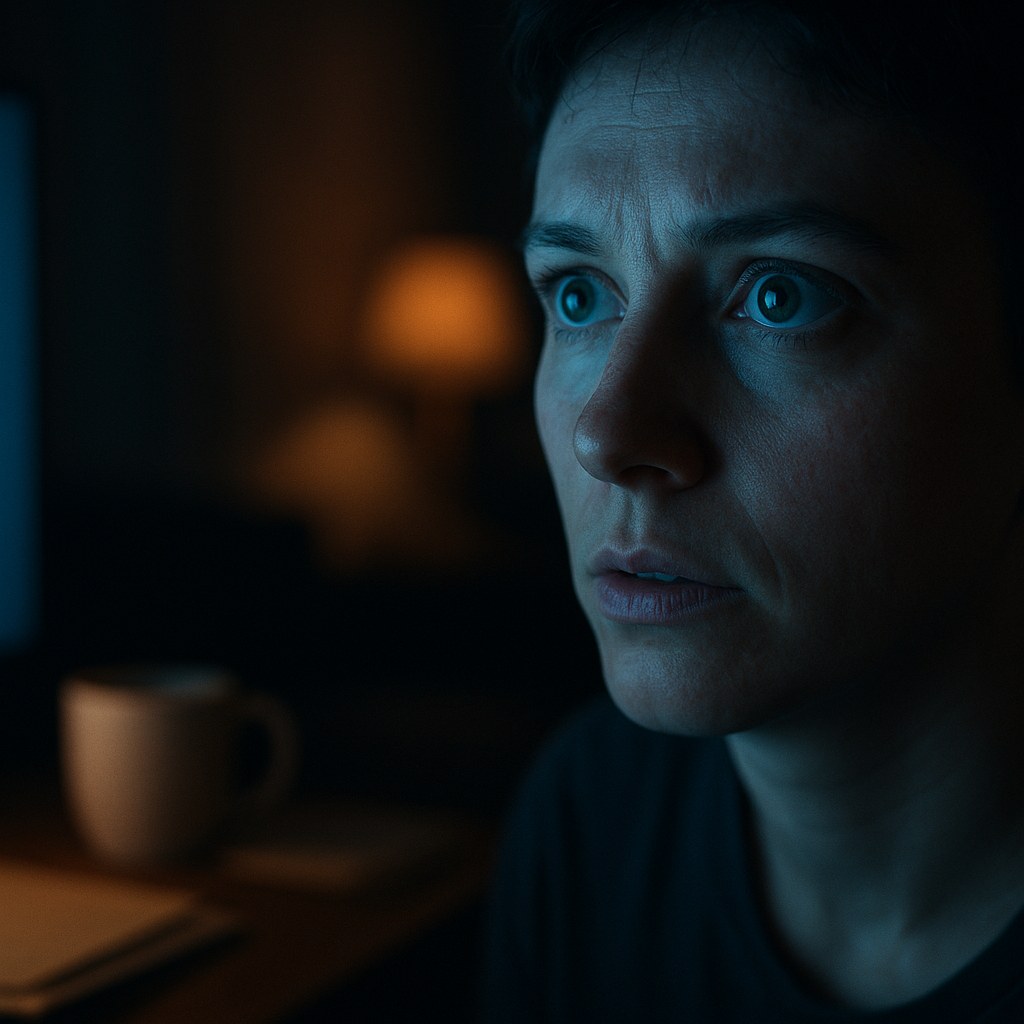
It’s 11:30 PM on a Tuesday. You told yourself you’d just watch one episode. But three hours later, you’re still glued to the screen, analyzing the body language of a suspect in a ten-year-old cold case, terrified yet unable to look away. If this scenario sounds familiar, you are far from alone.
The streaming era has ushered in a golden age of non-fiction storytelling, and true crime sits comfortably on the throne. From Netflix juggernauts like Making a Murderer to the endless scroll of mystery docuseries on Hulu and Max, our cultural appetite for the macabre seems insatiable. But this isn’t just a morbid curiosity or a guilty pleasure. According to psychologists and media researchers, the psychological appeal of true crime documentaries is rooted in evolutionary biology, cognitive puzzle-solving, and a complex desire for safety.
In this deep dive, we’ll explore the science behind why we are drawn to the darkest corners of human behavior, why women make up the majority of the audience, and how technology has transformed us from passive viewers into digital detectives.
The Perfect Storm: Streaming Technology and True Crime
Before dissecting the psychology, it is crucial to understand the delivery method. The explosion of true crime interest correlates directly with the rise of on-demand streaming platforms. In the past, crime reporting was limited to nightly news segments or weekly procedural dramas. Today, algorithms are designed to feed our obsession.
Streaming giants have mastered the art of the “binge.” True crime documentaries are often structured with cliffhangers at the end of every episode, triggering a dopamine loop that compels us to keep watching. Furthermore, the visual medium allows for a level of immersion that podcasts or books cannot match. High-definition reenactments, drone footage of crime scenes, and archival interrogation tapes create a visceral experience.
When we search for the psychological appeal of true crime documentaries streaming services, we find that the barrier to entry has vanished. We no longer have to wait for a weekly update; we can consume an entire tragedy in a single weekend. This accessibility has normalized the genre, moving it from the fringes of “guilty pleasure” to a dominant cultural force. It’s clear that streaming platforms are changing not just what we watch, but how we engage with entire genres.
The Biological Hook: Your Brain on True Crime
At its core, our fascination with true crime is hardwired into our brains. It engages some of our most primitive survival mechanisms while rewarding our intellectual curiosity.
The Amygdala and the “Safe Scare”
Why do we enjoy feeling afraid? It comes down to the amygdala, the part of the brain responsible for processing fear and emotion. When we watch a frightening scene in a documentary, our amygdala lights up as if the threat were real. Our heart rate increases, and adrenaline begins to flow.
However, because we are sitting safely on our couches, our prefrontal cortex (the logic center) steps in to remind us that we are not in danger. This creates a phenomenon known as “excitation transfer.” We experience the physiological arousal of fear without the actual risk. It provides a thrill similar to riding a roller coaster—a “safe scare” that allows us to test our limits in a controlled environment.
The Puzzle-Solving Instinct
Humans are natural pattern-seekers. We are biologically driven to solve problems and close “open loops.” True crime documentaries rarely lay out the answer immediately. They drip-feed information: a timeline here, a suspect interview there, a piece of forensic evidence revealed in episode four.
This structure triggers our brain’s desire for closure. As viewers, we mentally play detective. We form hypotheses, look for inconsistencies in witness statements, and try to predict the outcome. This cognitive engagement is deeply satisfying. When the mystery is finally solved (or even when it isn’t), the process of trying to figure it out stimulates the release of dopamine, the brain’s “feel-good” chemical associated with reward and learning.
Why Are Women Drawn to True Crime?
One of the most discussed aspects of true crime fandom is the demographic split. Statistics consistently show that women consume true crime content at significantly higher rates than men. According to data from Edison Research, women make up the vast majority of podcast listeners in this genre, and similar trends apply to documentary viewership.
Survival and Risk Assessment
The prevailing theory among psychologists is that women watch true crime as a form of “survival rehearsal.” Women are statistically more likely to be victims of certain types of violent crime, particularly stalking and domestic violence. Watching documentaries allows women to study the behaviors of predators in a safe setting.
By analyzing how a perpetrator selected their victim or what red flags were missed, viewers often feel they are gathering “survival data.” It is a way to subconsciously ask, “What would I do in that situation?” or “How can I make sure this doesn’t happen to me?”
Furthermore, true crime often focuses on the psychology of the victim, fostering a sense of empathy and connection. Many female viewers feel a social responsibility to remember the victims, ensuring their stories are told rather than forgotten.
The Evolution of the “Armchair Detective”
Technology has blurred the line between spectator and participant. The psychology behind true crime obsession has shifted with the advent of social media and internet forums. We are no longer just watching the story; we are investigating it.
Immediately after a new docuseries drops, Reddit threads and Facebook groups light up with theories. This phenomenon transforms the viewing experience from a solitary activity into a communal investigation. Viewers pause the screen to read blurry court documents, cross-reference timestamps on Google Maps, and debate legal nuances in the comments section.
This interactive element satisfies a deep need for justice. In a world where the legal system often moves slowly or fails, the “court of public opinion” moves fast. For many viewers, engaging with the content digitally feels like a way to contribute to the truth, even if they are thousands of miles away from the crime scene.
The Netflix Effect and Case Resolution
The power of the audience is tangible. Documentaries like Unsolved Mysteries and The Keepers have generated thousands of tips, leading to actual arrests and the reopening of cold cases. This reinforces the psychological appeal: watching isn’t just entertainment; it can actually lead to real-world justice.
Is Watching True Crime “Cozy”?
It might sound paradoxical to describe murder documentaries as “cozy,” but this is a growing sentiment, particularly on platforms like Reddit and TikTok. How can graphic content be comforting?
For many, the appeal lies in the narrative resolution. Real life is chaotic, messy, and often lacks justice. True crime documentaries, particularly those with a definitive ending, offer a sense of order. The bad guy is caught. The mystery is solved. The narrative arc is complete.
Additionally, for people dealing with anxiety, watching true crime can serve as a form of exposure therapy. It validates their fears but also demonstrates that these fears can be confronted and overcome. The structured format of a documentary—narrator, evidence, resolution—provides a container for anxiety that feels manageable.
The Dark Side: When Fascination Becomes Unhealthy
While the psychology of true crime fans is largely rooted in curiosity and safety, there is a tipping point. Consuming high volumes of violent content can have adverse effects on mental health.
Heightened Anxiety and the “Mean World Syndrome”
Media scholar George Gerbner coined the term “Mean World Syndrome,” which suggests that long-term exposure to violence-related content leads people to believe the world is more dangerous than it actually is. Binge-watching true crime can skew your perception of statistical reality, making you feel that you are at a higher risk of victimization than you truly are.
If you find yourself double-checking your locks excessively, feeling paranoid in public, or losing sleep, it may be time to moderate your intake. The very mechanism that makes true crime appealing—the physiological arousal—can lead to burnout and chronic anxiety if overdone.
Desensitization
Another risk is desensitization. When we view real-life tragedies as entertainment, there is a danger of losing empathy for the actual human beings involved. It is important to remember that these are not fictional characters; the “plot twists” are moments of real trauma for families and communities.
Healthy Viewing Habits for True Crime Fans
Given the psychological potency of the genre, it is helpful to establish boundaries. Here are actionable ways to enjoy true crime documentaries without letting them negatively impact your mental well-being:
- Set a Curfew: Avoid watching intense true crime right before bed. The adrenaline spike can interfere with your circadian rhythm and sleep quality. Try to finish your viewing at least two hours before sleep.
- Balance the Content: Intermix heavy documentaries with lighter content. If you just finished a 10-part series on a serial killer, follow it up with a comedy or a nature documentary to reset your nervous system.
- Engage Critically: Remember that documentaries are edited to tell a story. Always cross-reference facts with reputable news sources to avoid falling for biased narratives.
- Know Your Triggers: If a specific type of crime (e.g., home invasion) causes you genuine distress, it is okay to skip that content. Curate your watchlist based on what engages your mind without triggering panic.
It’s worth noting that watching movies can improve your mental health when approached mindfully, and the same principle applies to documentary viewing—moderation and self-awareness are key.
Conclusion
The psychological appeal of true crime documentaries is a complex tapestry woven from our evolutionary need for survival, our cognitive love of puzzles, and the modern technological landscape that places these stories at our fingertips. Whether we are watching to learn how to protect ourselves, to experience a “safe scare,” or to engage with a community of fellow sleuths, this genre serves a distinct purpose in our media diet.
As streaming platforms continue to produce high-quality investigative content, the line between viewer and detective will likely continue to blur. By understanding the psychology behind why we watch, we can approach the genre with mindfulness—satisfying our curiosity and our drive for justice while maintaining our own peace of mind.